

In chemical processing, petrochemical production, liquid blending, and other industrial applications, accurate process measurement is essential for maintaining product quality and improving operational control.
Two instruments that may be used in these applications are Coriolis mass flow meters and online liquid density meters. Although both can work with liquid process streams, they measure different properties and serve different purposes.
Understanding the difference helps engineers select the right instrument for their process.
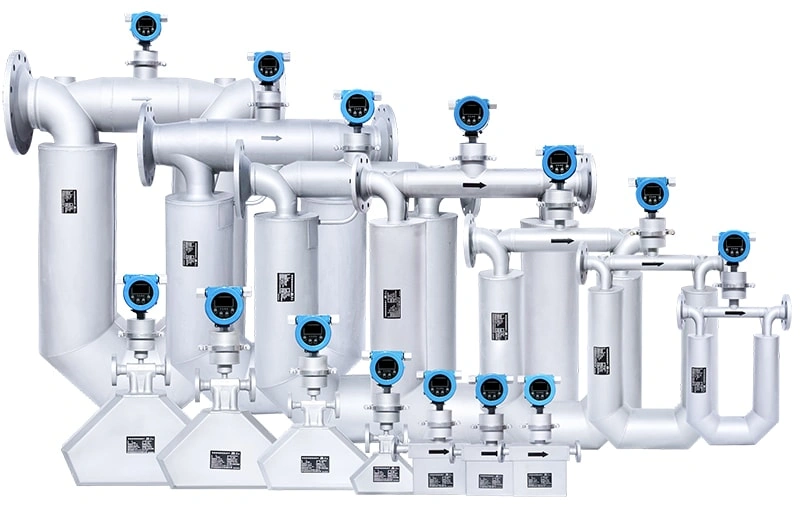
1. What Does a Coriolis Mass Flow Meter Measure?
A Coriolis mass flow meter measures the mass of fluid passing through the instrument per unit of time.
Unlike a volumetric flow meter, it does not need to rely solely on a volumetric measurement and a separate density value to determine mass flow. This makes Coriolis technology useful in applications where mass-based measurement is important.
Typical applications include:
● Chemical dosing and batching
● LPG and other hydrocarbon liquid measurement
● Industrial liquid transfer
● Process monitoring in chemical and petrochemical plants
● Mass-based consumption and production monitoring
Depending on the selected model and configuration, a Coriolis meter may also provide additional process information, such as fluid density and temperature. The availability and specifications of these measurements should be confirmed for the selected model.
2. What Does an Online Liquid Density Meter Measure?
An online liquid density meter measures the density of a liquid under its operating conditions.
Density is commonly expressed in kg/m³ or g/cm³. It is an important parameter in processes where product composition, concentration, quality, or consistency must be monitored.
Typical applications include:
● Liquid quality monitoring
● Chemical concentration and blending processes
● Petrochemical production
● Monitoring density changes during production
● Process control based on liquid density
An online density meter allows density data to be obtained directly from the process, helping operators monitor changes without relying entirely on manual sampling and laboratory measurements.
However, density alone does not indicate how much fluid is flowing through a pipeline. If the application requires a flow rate, an appropriate flow measurement instrument is also needed.
3. Key Differences at a Glance
Feature | Coriolis mass flow meter | Online liquid density meter |
Primary measurement | Mass flow rate | Liquid density |
Typical units | kg/h, t/h | kg/m³, g/cm³ |
Main purpose | Measure the amount of fluid flowing | Monitor liquid density |
Common applications | Transfer, dosing, batching and process flow control | Product quality, blending and density monitoring |
Selection priorities | Flow range, accuracy, pressure drop and fluid compatibility | Density range, accuracy, temperature and fluid compatibility |
The most suitable instrument depends on the process variable that needs to be measured and controlled.
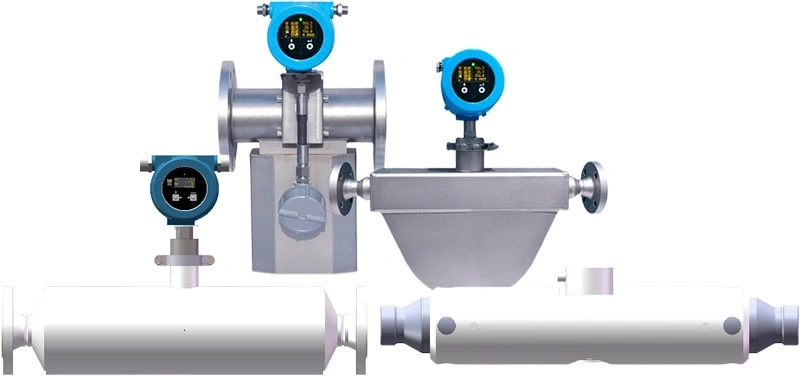
4. When Should You Use Both Instruments?
Some applications require both mass flow and liquid density information.
For example, a chemical production line may need to measure the mass of liquid delivered to a mixing vessel while simultaneously monitoring the density of the liquid to evaluate process consistency.
A Coriolis mass flow meter can provide mass flow measurement, while a dedicated online liquid density meter can provide density data where a separate or specialized density measurement is required.
Whether both instruments are necessary depends on the process requirements, the capabilities of the selected flow meter, and the required measurement performance.
5. What Should You Consider Before Selecting an Instrument?
Before selecting a mass flow meter or density meter, consider the following:
● Fluid type and chemical composition
● Minimum and maximum operating flow or density
● Operating temperature and pressure
● Required accuracy and response time
● Wetted material compatibility
● Process connection and installation conditions
● Output signals and control system requirements
● Applicable certifications and project specifications
For density measurements, temperature is particularly important because liquid density can change as temperature changes. If density at a reference temperature is required, the applicable compensation method and fluid-specific data should be established.
Find the Right Measurement Solution for Your Process
Qingdao Add Value Flow Metering Co., Ltd. specializes in Coriolis mass flow meters and online vibrating-tube liquid density meters for industrial applications.
We support customers in evaluating measurement requirements and selecting appropriate instrument configurations based on their process conditions.
Not sure whether your application needs a mass flow meter, a density meter, or both? Contact our team with your fluid properties, operating conditions, and measurement objectives. We will help you identify the most appropriate solution for your application.
